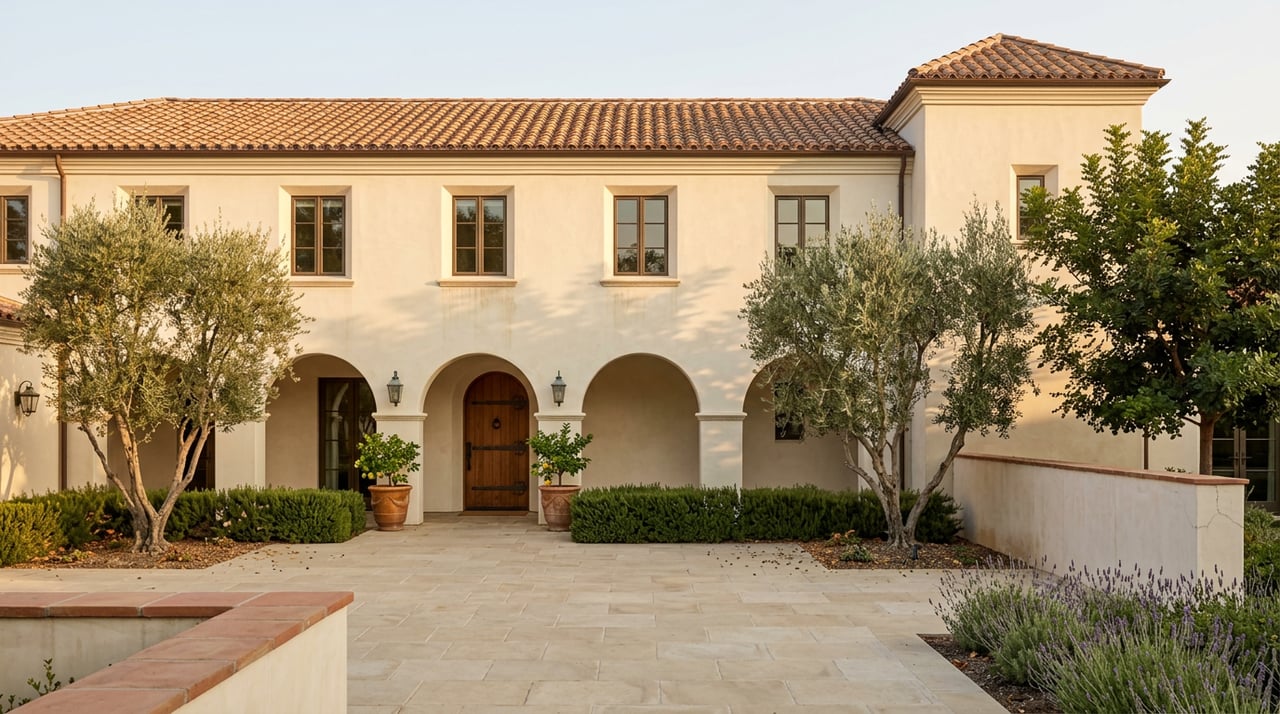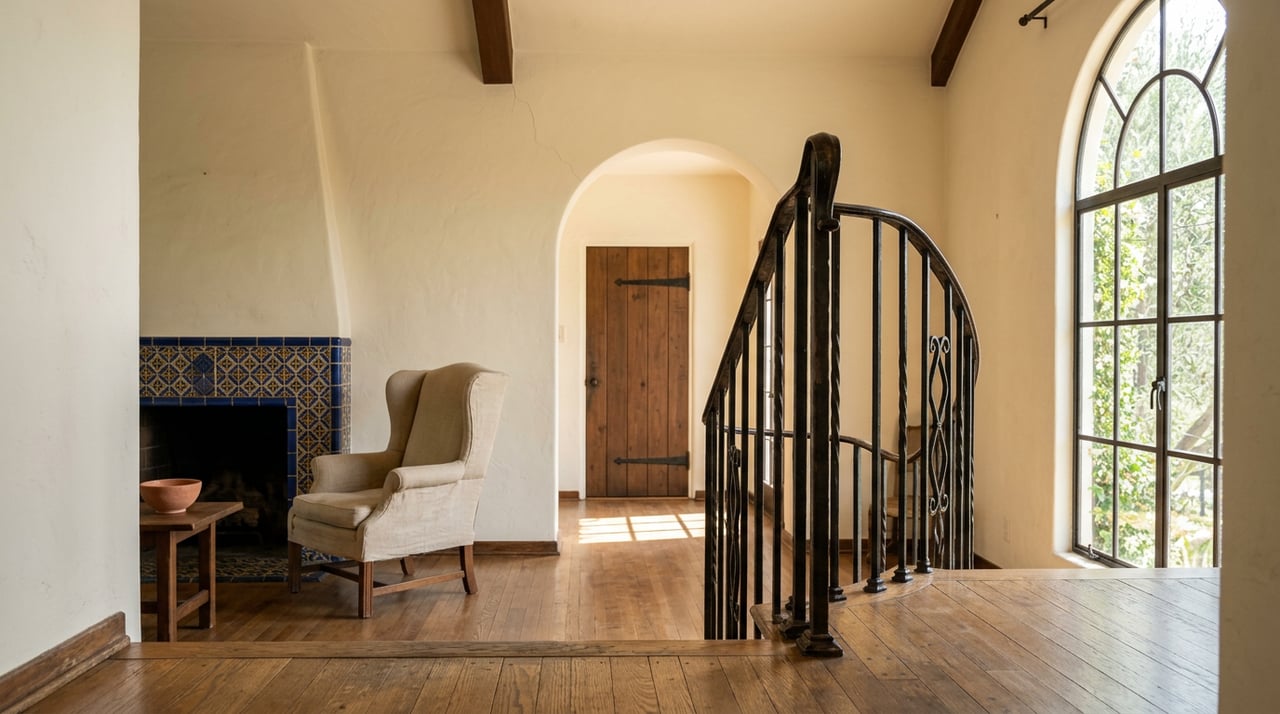
Late last year, a stack of city envelopes went out to owners on Barnard Way, Lincoln Drive, Poli Street, and the other blocks that make up Hobson Heights. Each one carried the same basic message: your property has been flagged in a draft survey as a potential contributor to a future historic district. Some owners read that and assumed their remodel plans were dead. Others assumed nothing had really changed and filed the letter away. Both reactions miss what's actually happening, and if you own a home here, or you're thinking about listing one, the gap between those two reactions is exactly where the risk sits.
Here's the confusion in one sentence. Three separate mechanisms, each with a different consent rule, are being talked about as if they're one thing: a citywide survey that only identifies, a Mills Act contract that you choose, and a historic district ordinance that could eventually bind a whole block whether every owner signed up or not. Sort those apart and the picture gets a lot clearer for anyone weighing a sale in the next year.
Being On A List Is Not The Same As Being Designated
The document that started this round of letters is the City of Ventura's 2025 Citywide Historic Context Statement and Survey. It identified several potential districts across the city, including one called Hobson Heights Residential: 174 parcels running north from East Main Street, bounded by North Pacific Avenue on the east and the Sanjon Barranca on the west, taking in both sides of Barnard Way, Monita Drive, Lincoln Drive, Marisol Drive, and Poli Street.
The city's own Historic Preservation page is direct about what that survey does and doesn't do. Surveyed resources don't automatically become designated landmarks, and no designation results from the survey activity itself. What the survey does is give city planning staff a reference tool: if you request a demolition permit or a major remodel on a flagged property later, staff will know to look more closely at the potential historic impact before signing off.
There's a wrinkle worth knowing about, too. Nationally, a structure typically needs to be at least 50 years old to be considered for historic status. Ventura's survey uses a 40-year threshold instead, specifically so potential resources aren't overlooked. That means more Hobson Heights homes landed on this list than would have shown up under the standard most cities use, including houses built well into the 1980s.
Why Some Owners Are Fighting The Survey Anyway
If a survey listing carries no automatic restriction, why did a number of Hobson Heights owners file formal objections ahead of the October 2025 Historic Preservation Committee hearing? Because the fight isn't really about the survey. It's about what comes after it.
Several owners argued in written comments that adopting a historic district ordinance for Hobson Heights should be treated as a project under the California Environmental Quality Act, since a district ordinance is a set of land use regulations, and regulations that could restrict how homeowners repair, renovate, or alter their houses deserve full environmental review before adoption. One letter pointed out that the city's own consultant had already found their specific house didn't meet the bar for individual historic significance, yet the property was still being pulled into consideration as a district contributor, a status with different rules than an individual landmark. Other owners raised a more practical worry: that added review requirements on routine repairs, like replacing failing rear doors or old windows, could make maintaining an older home more expensive without a workable path to recoup the cost.
That last point connects to a real trade-off. The Mills Act, the state program most owners actually want when they hear "historic home," is opt-in. A historic district designation is not necessarily opt-in in the same way, at least not with the same guaranteed individual consent that applies when the city considers a single property for landmark status. That asymmetry is the actual source of the friction, and it's why the timeline below matters more than the headline "Hobson Heights might become historic."
The Timeline, Laid Out In One Place
Most of what's public about this process is scattered across staff reports and committee minutes. Here's the sequence as it has actually unfolded:
- October 9, 2025: City staff present the draft survey to the Historic Preservation Committee, formally identifying Hobson Heights Residential as a potential 174-parcel district.
- December 3, 2025: Public hearing notices go out to affected property owners.
- December 11, 2025: The Historic Preservation Committee recommends the City Council adopt the survey.
- February 3, 2026: City Council hearing on adoption is scheduled, then continued.
- March 12 and April 9, 2026: The committee continues its review as consultants incorporate revisions.
- April 28, 2026: City Council again continues the item, this time to a date certain of July 14, 2026.
- June 11, 2026: The committee recommends adoption a second time, this round with changes from the city's historic consultant, Kari Fowler of Historic Resources Group, folded in.
- July 14, 2026: City Council was scheduled to take up adoption a third time.
Two continuances in five months is not a rubber stamp. It's a sign the city is still working through owner objections. That July 14 hearing has already come and gone by the time you're reading this, and the published minutes weren't posted in time for this piece, so anyone timing a sale or a permit application around this issue should check the city's agenda center directly for whatever the council actually decided rather than relying on secondhand summaries, including this one.
The Mills Act Rewards Recent Buyers More Than Long-Time Owners
Set the district question aside for a moment, because there's a separate, genuinely useful mechanism available to owners of qualifying Hobson Heights homes right now: the Mills Act. It's a state program, enacted in 1972, that lets a city or county enter into a contract with an owner of a qualified historic property. In exchange for a minimum 10-year commitment to maintain and restore the home to preservation standards, the owner's property is reassessed using an income approach instead of the standard method, and the resulting tax bill can drop.
Here's the part that surprises people. The size of that savings has less to do with how old or grand the house is and more to do with when you bought it. Because the Mills Act assessment is based on theoretical rental income rather than market value, it tends to help most the owners whose current assessed value is already close to full market value, which typically means recent buyers. A family that has owned the same Hobson Heights house since the 1990s already benefits from a low Prop 13 assessment, so an alternate income-based valuation may not move the needle much. A household that just closed on a Hobson Heights property at today's prices, on the other hand, is likely sitting on a fresh, full-value assessment, and that's exactly the situation where the Mills Act formula tends to produce the biggest gap between old and new tax bills.
That's worth knowing before you assume the Mills Act is only a legacy-owner perk. It's often more valuable to whoever buys the house next.
One more detail matters for anyone selling a home already under a Mills Act contract: those contracts don't expire at closing. They automatically renew each year and transfer to the new owner when the property sells, along with both the tax benefit and the preservation obligations. If your Hobson Heights home carries a Mills Act contract, that's a marketing point worth highlighting to the right buyer, not a liability to bury in the disclosures.
Property owners considering entering a Mills Act contract for the first time should also know it isn't free to administer. The County of Ventura's own program page notes that the actual reduction can vary dramatically from property to property depending on factors including the year the property was purchased, and the county's planning division charges deposit and annual administration fees to process and inspect contracts, separate from any tax savings.
What This Means If You're Listing This Year
None of this means Hobson Heights is suddenly a difficult place to sell. It's still one of Ventura's most distinctive neighborhoods, and the same qualities that put it on the survey are the qualities buyers already move here for. But three things are worth doing before you list, or before you pull a permit for a remodel, while the outcome of the City Council's review is still settling:
First, confirm your specific parcel's status. The survey's boundary description covers most of the neighborhood, but not every home inside it carries the same classification, and the difference between "contributor" and "non-contributor" affects how staff will treat a future permit request.
Second, if you're planning exterior work, ask early rather than after a contractor is already scheduled. The city's own guidance says a demolition or major remodel request on a potential landmark can trigger additional environmental analysis, and that review adds time you'll want to plan for.
Third, if you're selling, be ready to explain the current state of this process to buyers in plain terms. A well-informed buyer isn't scared off by an open civic process. A buyer who finds out about it from a neighbor after their offer is accepted might be.
Toni Guy has lived in Hobson Heights for about 15 years, and the neighborhood's history is personal enough to her that she wrote, produced, and narrated a documentary about it, The Legends of Hobson Heights, which has screened multiple times at the Museum of Ventura County and was covered by the Ventura County Reporter. That's not a credential you pick up by reading a staff report the week before a listing goes live. Preservation advocates like the San Buenaventura Conservancy are also tracking this process closely if you want a second, non-city source following the same hearings.
A Few Questions Owners Keep Asking
Does being on the survey list lower my home's value? There's no evidence that survey identification by itself affects value. What can affect a transaction is uncertainty, so the more clearly a listing explains where things stand, the less friction a buyer's lender or appraiser is likely to raise.
Can I still remodel now that the City Council has taken this up again? Routine interior work generally isn't affected. Exterior changes and major remodels on flagged properties are the ones that may require additional review, so it's worth checking with the city's planning division for the current status before you finalize scope and budget.
What happens to a Mills Act contract if I sell? It transfers with the property. The buyer inherits both the tax treatment and the maintenance obligations, and the contract keeps running on its original term.
If you own in Hobson Heights and you're trying to figure out how any of this affects your specific timeline, whether that's a sale this year or a remodel you've been planning for longer than that, it's worth a conversation before you make either move. Get Your Instant Home Valuation through Toni Guy to see where your home stands today, and let's talk through what the next few months of this process could mean for you.